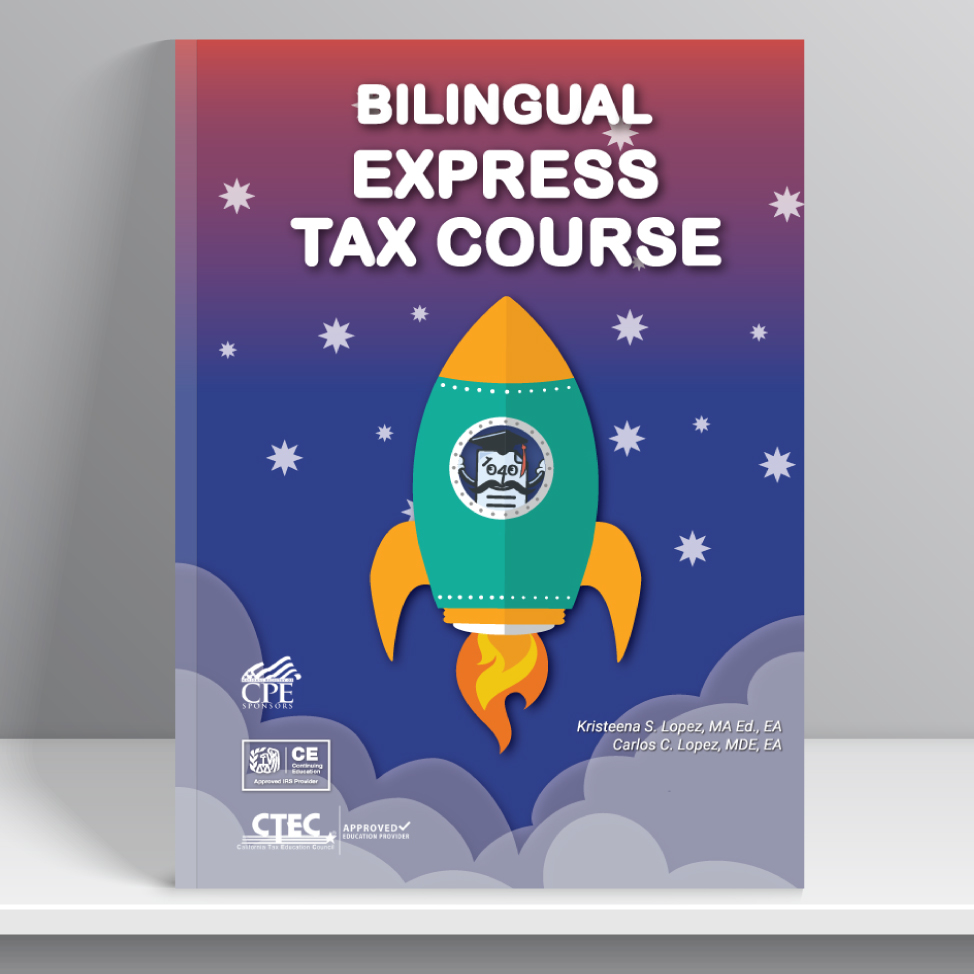
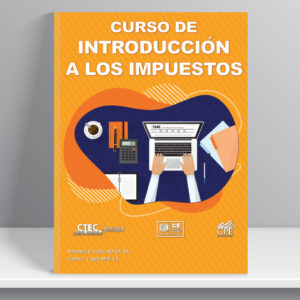
Bilingual Express Tax Course

CE Credits: 10 Federal Tax Law · 2 Behavioral Ethics · 12 Hours

A fast, 12-hour walkthrough of Form 1040 essentials. Perfect as a refresher for working preparers or a quick-start for front desk and support staff who need to answer basic client questions with confidence. Fully self-study, at your own pace.

In this course you will learn:

  • How filing status, income, deductions, and credits fit together on a return
  • The difference between the standard and itemized deductions
  • How qualifying dependents and tax credits reduce what a taxpayer owes
  • The professional and ethical standards preparers must follow

Créditos CE: 10 Derecho Tributario Federal · 2 Ética del Comportamiento · 12 Horas

Un recorrido rápido de 12 horas por lo esencial del Formulario 1040. Perfecto como repaso para preparadores en activo o un inicio rápido para el personal de recepción y apoyo que necesita responder preguntas básicas de los clientes con confianza. Totalmente de autoestudio y a tu propio ritmo.

En este curso aprenderás:

  • Cómo el estado civil tributario, los ingresos, las deducciones y los créditos se combinan en una declaración
  • La diferencia entre la deducción estándar y las detalladas
  • Cómo los dependientes que califican y los créditos tributarios reducen lo que debe el contribuyente
  • Los estándares profesionales y éticos que los preparadores deben seguir

$184.00

Out of stock

Description

CE Credits
10 Federal Tax Law  ·  2 Behavioral Ethics  ·  12 Hours total

Need to get up to speed on Form 1040 without committing to a full-length course? The Express Tax Course covers the essentials in a fraction of the time, perfect as a fast refresher for working preparers or a quick-start for front desk and support staff who need to answer basic client questions with confidence.

In just 12 hours, you’ll cover filing status, standard and itemized deductions, income, credits, qualifying dependents, capital gains and losses, adjustments to income, and more, everything you need to understand how a return comes together, without the deep dive. No classroom and no long wait. Enroll today and start building your tax knowledge right away.

What you’ll be able to do

  • Safeguard the taxpayer’s documents
  • Know when to use Form 4868
  • Understand the different e-filing options
  • Complete Schedule 2 of Form 1040
  • Explain how a nonrefundable credit affects tax liability
  • Know which deductions are limited to the 7.5% floor

How this course works

All materials are included. You study independently through readings and lessons, then sit for a final exam at your own pace.

Course chapters

  1. Filing status, dependents, and deductions. Learn how to determine the right filing status, who qualifies as a dependent, and how to choose between the standard and itemized deductions.
  2. Income. Understand the types of taxable income, from wages and tips to interest and dividends, and where each belongs on the return.
  3. Adjustments to income. Discover above-the-line deductions like student loan interest and IRA contributions that reduce taxable income.
  4. Payments and tax credits. See how withholding, estimated payments, and credits like the Child Tax Credit and EIC reduce what a taxpayer owes.
  5. Ethics. Review the professional standards and responsibilities tax preparers must follow, including Circular 230 guidelines.

Final exam. The final exam tests your knowledge across all chapters to earn your CE credits.

Course details

Field of study Federal Tax Law (10 hrs), Behavioral Ethics (2 hrs)
Course level Basic
Prerequisite None
Delivery method Self-study
CE credit deadline July 31, 2027
Upon completion Certificate of Completion
IRS credit reporting CE credits reported directly to the IRS for tax preparers with a valid PTIN

This course does not qualify for California Continuing Education hours.

Créditos CE
10 Derecho Tributario Federal  ·  2 Ética del Comportamiento  ·  12 Horas en total

¿Necesitas ponerte al día con el Formulario 1040 sin comprometerte a un curso completo? El Curso Express de Impuestos cubre lo esencial en una fracción del tiempo, perfecto como un repaso rápido para preparadores en activo o un inicio rápido para el personal de recepción y apoyo que necesita responder preguntas básicas de los clientes con confianza.

En solo 12 horas, cubrirás el estado civil tributario, las deducciones estándar y detalladas, ingresos, créditos, dependientes que califican, ganancias y pérdidas de capital, ajustes a los ingresos y más, todo lo que necesitas para entender cómo se arma una declaración, sin la inmersión profunda. Sin salón de clases y sin largas esperas. Inscríbete hoy y empieza a construir tu conocimiento tributario de inmediato.

Lo que podrás hacer

  • Proteger los documentos del contribuyente
  • Saber cuándo usar el Formulario 4868
  • Comprender las diferentes opciones de presentación electrónica
  • Completar el Anexo 2 del Formulario 1040
  • Explicar cómo un crédito no reembolsable afecta la obligación tributaria
  • Saber qué deducciones están limitadas al umbral del 7.5%

Cómo funciona este curso

Todos los materiales están incluidos. Estudias de forma independiente a través de lecturas y lecciones, y luego presentas un examen final a tu propio ritmo.

Capítulos del curso

  1. Estado civil tributario, dependientes y deducciones. Aprende a determinar el estado civil correcto, quién califica como dependiente y cómo elegir entre la deducción estándar y las detalladas.
  2. Ingresos. Comprende los tipos de ingresos gravables, desde salarios y propinas hasta intereses y dividendos, y dónde va cada uno en la declaración.
  3. Ajustes a los ingresos. Descubre las deducciones por encima de la línea, como los intereses de préstamos estudiantiles y las aportaciones a cuentas IRA, que reducen el ingreso gravable.
  4. Pagos y créditos tributarios. Descubre cómo la retención, los pagos estimados y créditos como el Crédito Tributario por Hijos y el EIC reducen lo que debe el contribuyente.
  5. Ética. Repasa los estándares y responsabilidades profesionales que los preparadores de impuestos deben seguir, incluyendo las pautas de la Circular 230.

Examen final. El examen final evalúa tu conocimiento a través de todos los capítulos para obtener tus créditos CE.

Detalles del curso

Campo de estudio Derecho Tributario Federal (10 hrs), Ética del Comportamiento (2 hrs)
Nivel del curso Básico
Requisito previo Ninguno
Método de entrega Autoestudio
Fecha límite de crédito CE 31 de julio de 2027
Al finalizar Certificado de Finalización
Reporte de créditos al IRS Los créditos CE se reportan directamente al IRS para preparadores de impuestos con un PTIN válido

Este curso no califica para las horas de Educación Continua de California.
Chapters

Chapters

Chapter 1: Ethics

This chapter will explain how to determine who qualifies as a tax return preparer, what representation rights a preparer has, how that individual is bound by the Circular 230 guidelines, and what it means for a tax preparer to behave ethically and responsibly.

Chapter 2: Best Practices to Counteract Cybercrime

Protecting yourself and your clients is one of the biggest challenges that tax return preparers face today. Criminals have learned that tax return preparers have a lot of information about their customers, including their Social Security numbers, information about their families, and employment history. Criminals want to steal this information and weaponize it to steal money from banks, the IRS, or conduct other crimes.

Chapter 3: Compiling Taxpayers Information

This chapter explains the importance of interviewing the taxpayer. Each segment of the chapter will cover a section of Form 1040 with sample interview questions that are needed for the section discussed. The tax professional needs to understand the importance of knowledgeable questions to determine if the taxpayer is eligible to claim certain credits. Interview questions asked should be documented as well as the answers the taxpayer provided. Knowing basic tax law is essential.

Preparing tax returns is an art; knowing which questions to ask will help determine the best tax situation for the individual. Just imputing information into software does not prepare an accurate tax return. The saying is true: “garbage in, garbage out”. Entering incorrect information so that the taxpayer receives a higher refund is not the best situation for you or the client. This chapter provides you with a brief overview of current year forms and sample questions to determine the best tax position for the taxpayer. Asking the taxpayer, the right questions from the beginning provides the tax preparer accurate answers needed to complete the tax return.

Chapter 4: Filing Status, Dependents and Deductions

This chapter will present an overview of the Tax Cuts and Jobs Act standard deduction and what circumstances permit taxpayers to claim a higher standard deduction. You will also learn what an exemption is, what exemptions each of the filing statuses can claim, and how to identify a qualifying dependent.

Chapter 5: Income

The IRS has the authority to tax all income from whatever source it is derived. This includes compensation for services, gains from dispositions of property, interest and dividends, rent and royalties, pensions and annuities, gambling winnings, and even illegal activities. All such income a person receives is collectively referred to as “worldwide income.” However, not all money or property is taxable or subject to tax. This chapter will cover the different types of taxable and nontaxable income and show you where and how to report such wages on a professionally prepared tax return. A tax professional must recognize the different kinds of taxable income, tax-exempt income, and other income included in Schedule 1, line 21, and must know how to figure out the taxable percentage on Social Security benefits.

Chapter 6: Tax Credits and Payments

A nonrefundable tax credit reduces the amount of tax liability that may have to be paid. Unlike a deduction, which reduces the amount of income that is subject to taxation, a credit directly reduces the tax itself. There are two types of credits: nonrefundable, which cannot reduce tax liability below zero, and refundable, which can reduce tax liability below zero, resulting in the need for a refund.

Chapter 7: Other Taxes and Taxpayer Penalties

This chapter provides an overview of miscellaneous taxes from the Form 1040 and reported on Schedule 2 that a taxpayer might be assessed. This includes excess Social Security tax, additional taxes on IRAs, the Alternative Minimum Tax, and household employment taxes.

Chapter 8: What Every Employee Needs to Know

Studies have shown that the first 3 seconds between two individuals is crucial. Eye contact, facial expression, and stature all determine how the individual will respond to the other person. It is very important in the tax preparation business that all employees and employers understand the importance of interacting with others. Although most of this chapter will use the terms receptionist or office staff, this section is important for all employees and employers in training excellent employees.

Employers, this section will help you relieve some of your stress during tax season. Take the time to train the front office staff in how you want them to answer your phone, how to deliver messages to you, and how to handle difficult customers.

The content in this section is based on our experiences. The examples given are suggestions, and as an employer you may be able to add areas that are unique to you. If you share them with us, we can share them with others.

Course Details

Course Details

Field of Study: Federal Tax Law 6 Hours, Behavioral Ethics 2 Hours
Course Level: Basic
Prerequisite: General tax preparation knowledge is required.
Delivery Method: Self-Study

Expiration Date to earn CEs: October 1, 2022.
15G0B-T-00476-20-S
15G0B-E-00444-20-S

Scroll to Top